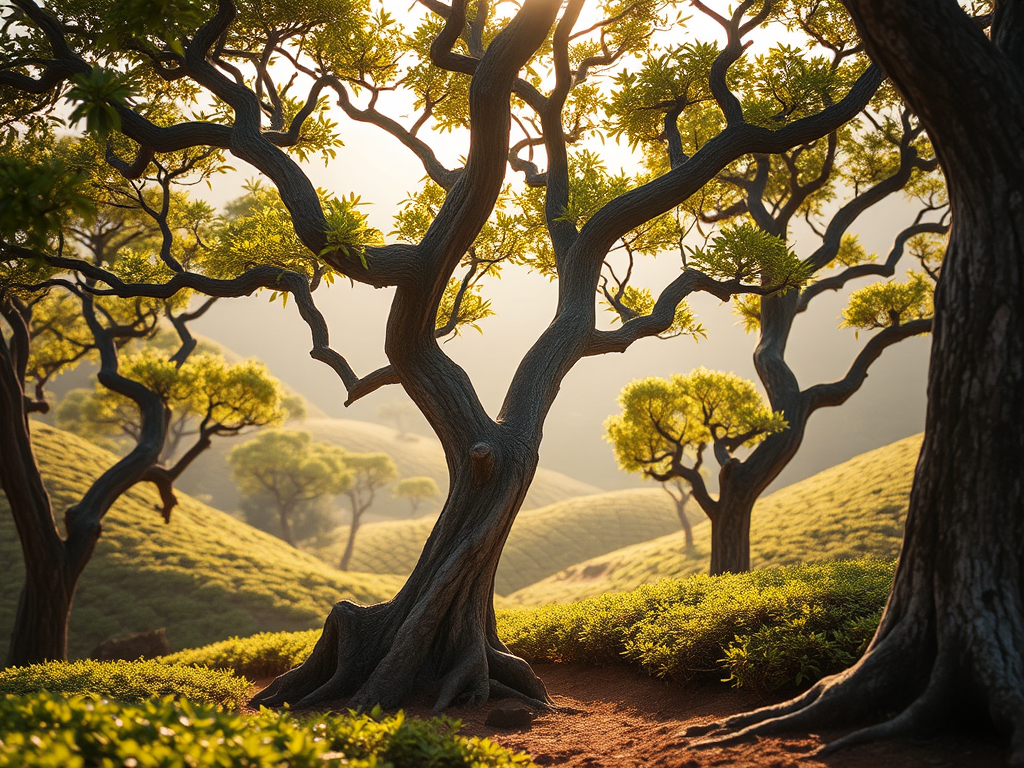
The Wild Side of Tea
While most tea plants are cultivated on farms in organized rows for easier harvesting, there are also wild tea plants that grow naturally without human intervention.
Many of these wild varieties are native to the forests of Yunnan, China, considered the birthplace of tea, where some of the oldest tea trees can be found. When the Camellia sinensis plant is allowed to grow, it transforms into a tree, requiring tea pickers to climb up to harvest the new leaves that sprout at the top.
What is Wild Tea?
Tea plants are considered “wild” when:
a) They grow naturally in their native habitat without any human intervention.
b) They exist in biodiverse forests with some level of cultivation.
c) They are farmed but allowed to grow with minimal pruning.
Wild indigenous tea plants are highly prized for their unique and complex flavors, which benefit from the rich biodiversity of their environment. Additionally, their limited and unpredictable yields make them even more desirable
Examples of Wild Indigenous Plants
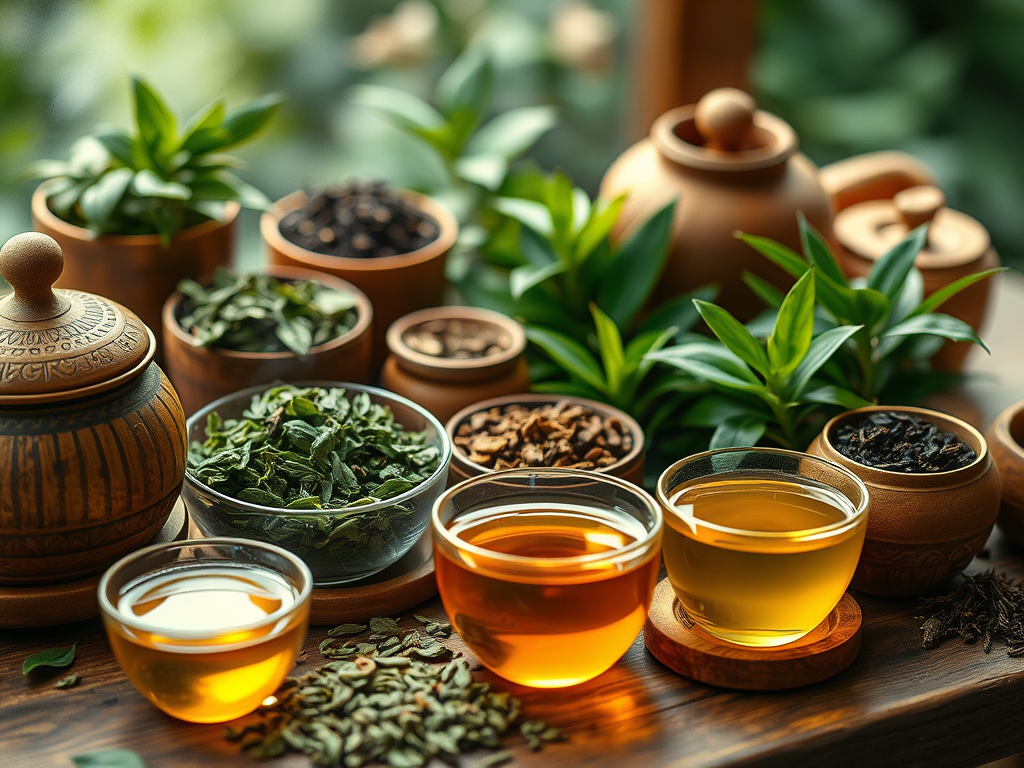
Wild indigenous tea plants are highly sought after because they give unique and more complex flavors (thanks to the biodiverse environment that enriches the soil) and because their yield is limited and unpredictable.
Wild tea plants are plants that grow without human intervention or with minimal cultivation and are often found in biodiverse forests. They are highly sought after for their unique flavors, which are enriched by the soil in their natural environment. Some examples of wild tea plants include:
- Stinging Nettle: The leaves of this plant are used to make nettle tea, which can also be made with the root, though the root has a more bitter taste. As Old English traditional medicine, nettle is one of the nine plants invoked in the pagan Anglo-Saxon Nine Herbs Charm, recorded in 10th-century traditional medicine.
Nettle was believed to be a lactation inducer. Studies have been done that show nettles are an effective therapy in relieving the pain of arthritis. Stinging nettle tea is made from dried nettle leaves. The leaves are treated to remove the hair-like barbs that can cause irritation. - Raspberry: The leaves of the wild raspberry plant can be used to make a fruit tea. Historical uses of the leaves have been to treat digestive issues, menstrual cramps, cardiovascular health, inflammatory conditions, mouth ulcers, sore throats, and gum disease. Raspberries are excellent source of protective antioxidants. Raspberry leaf tea contains vitamins and minerals, including vitamins C, E, A, and B, as well as magnesium, potassium, iron, and calcium.
- Red Clover: This common wild plant is native to Eurasia and is valued for its blossoms and use in making tea. Red clover is also a source of vitamins, minerals, and electrolytes, including calcium, chromium, magnesium, B vitamins, and vitamin C.
However, it should be noted that red clover also has minor estrogenic properties, so it should be avoided by people who are pregnant or breastfeeding, or who have hormone-sensitive conditions or bleeding disorders. You should always speak to your healthcare provider before taking red clover. - Yarrow: This soft flowering plant is commonly found in North America, Europe, and Asia, and is often consumed as a tea. Yarrow contains many vitamins, minerals, and other natural compounds, including flavonoids, essential fatty acids, and coumarins.
One study found that people with multiple sclerosis who took yarrow daily for one year had fewer acute attacks and improved on cognitive tests.
Yarrow tea can be made by steeping the flowers, leaves, or stems of the yarrow plant. However, yarrow can increase stomach acid, which may decrease the effectiveness of some medications, including antacids and H2-blockers. - Dandelion: Dandelion root tea is made from the dandelion plant, which has many uses and medicinal properties. Dandelion teas potential health benefits include anti-inflammatory, improved liver health, lower blood pressure, improved immune system, improved digestion, improved kidney function, detoxification, and a diuretic effect.
It should be noted that A 2011 Canadian study investigated the effect of dandelion root extract on human melanoma cell lines in vitro. - Bee Balm: This perennial herb belongs to the mint family is also known as bergamot, lemon balm or Oswego tea. This North American native plant can be used to make tea with both the leaves and the flowers.
Bee balm can be consumed as a tea, tincture or used as a steam inhalation. To make a steam, you can put bee balm leaves and flowers in hot water, cover it with a towel, and inhale the steam.
Not only is this one of my favorite teas. It is also one of the more beautiful plants you can forage in the wild. - Wild Cherry Bark: This is a cherished herbal remedy with a rich history, used by Native Americans, practitioners of Traditional Chinese Medicine, and integrative medicine doctors alike. Most famous for its role as a cough suppressant, it contains amygdalin, which helps soothe coughs by calming the cough reflex.
But that’s not all—wild cherry bark is a multitasker! Its natural compounds can reduce inflammation, ease smooth muscle spasms, and act as an astringent to support tissues. This astringent quality also makes it effective for treating gastrointestinal issues, providing relief from diarrhea, indigestion, and gas.
As a bitter herb, wild cherry bark can be enjoyed as a comforting tea or transformed into a tincture or syrup. Many people find that sipping its warm tea is especially soothing during chilly weather. So, why not explore the wonders of wild cherry bark? Your body might just thank you! - Meadowsweet: Meet the pretty little plant also known by fun names like mead wort, bridewort, barbe de bouc, and barbe de chèvre! This charming perennial plant belongs to the rose family and hails from Europe and Western Asia. Meadowsweet loves to hang out in wet spots like damp meadows, riverbanks, and lush woodlands.
With its distinctive compound leaves—featuring up to five pairs of leaflets and a cute three-lobed tip—meadowsweet stands out. The leaves are a deep green on top and a soft grey underneath, while its lovely small flowers bloom in large clusters, showcasing white or creamy-yellow petals.
In folk medicine, meadowsweet has been a go-to for treating all sorts of ailments. Its flowers pack a powerful punch, boasting anti-inflammatory, analgesic, antibacterial, antioxidant, and even anti-cancer properties! Traditionally, it’s been used to ease heartburn, stomach ulcers, colds, joint pain, arthritis, and gout. Plus, it’s known to help increase urine output for those dealing with kidney or bladder infections.
So, whether you’re admiring its beauty in the wild or using it for its healing powers, meadowsweet is truly a delightful gift from nature! - New Jersey Tea: A Revolutionary Brew! The name “New Jersey Tea” emerged during the American Revolution, when its leaves were used as a substitute for imported tea. This charming, low-growing deciduous shrub typically reaches about 3 feet tall. Its leaves emit a refreshing wintergreen scent and became popular among European colonizers as a caffeine-free tea alternative.
Today, herbalists still value New Jersey Tea, especially the root bark, which is commonly used in remedies for issues related to the lymphatic system. So, whether you’re brewing a cup or exploring its herbal benefits, New Jersey Tea has a fascinating history and purpose!
Summary of Ancient Wild Tea Plants

- The oldest wild tea plants are located in the forests of Yunnan, China, regarded as the birthplace of tea. Notable areas include:
- Southern Yunnan: Home to the world’s largest concentration of ancient wild tea trees, including one that’s 1,400 years old. Three ancient tea forests here have been nominated for UNESCO World Heritage Site status.
- Qianjiazhai: Found within the Mt. Ailao National Forest Preserve, some tea trees in this area are older than Julius Caesar.
- Vietnam: Wild tea trees here can be around 800 years old, though most are likely between 80 and 150 years old, thriving in remote, biodiverse environments.
The oldest known tea remains were discovered in a royal tomb in Zoucheng, Shandong province, dating back to 453–410 BC.
While mature tea plants generally live for 40–50 years, some varieties can survive for up to 100 years. It’s important to note that wild tea plants grow naturally without human cultivation, whereas ancient tea trees often exist in managed plantations.
 Clara Teas
Leave a comment